Riot on the Plaza
jeremiah james
KC Psychfest: Day Three Wrap-Up
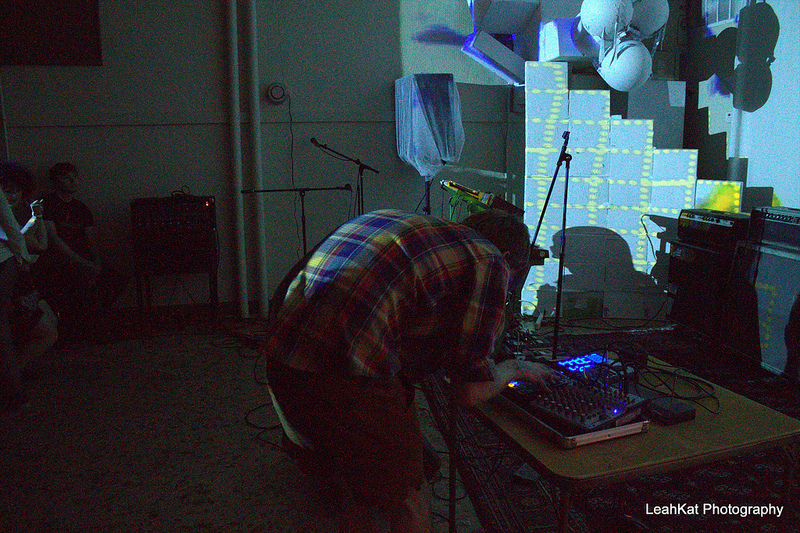
 At some point between his scheduled Friday performance for which he never appeared and Sunday afternoon before KC Psychfest’s third and final night, Brock Potucek was unearthed from a hazy slumber to open the evening as South Bitch Diet. In place of the bedroom lo-fi Potucek records, often imparted with nonsensical spoken word voice-overs, he instead used crudely wired sequencers cast across the carpet on which he sat. Cords gushed like a fountain from his devices, spreading in a tangle in front of the wealth of resources he bore. The Lazy front man produced a meandering array of sounds that amassed over a nearly 20 minute arc, becoming periodically abridged before once again gaining strength. Upon completion, an encore was requested by the meager audience, to which he complied with a shorter, improvisational piece.
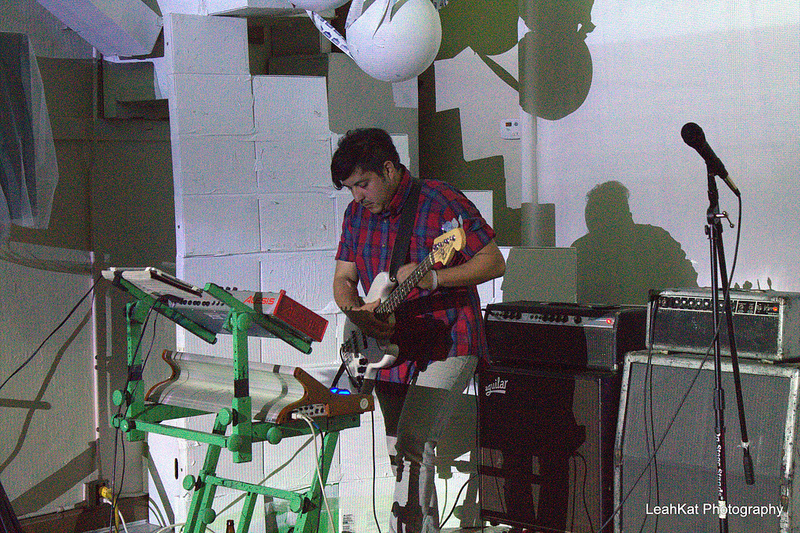 Yesterday, I made reference to how just hours before they were set to play, guitarist Jeremiah James chose to depart from Be/Non in pursuit of other musical interests. James is a fickle man, having also been a part of (and subsequently disbanded or moved on from) Elevator Division (in which he used the last name of Gonzales), Lovers in Transit, and Mannequin Skywalker, in addition to performing as a part of the live band for a variety of others. The new project from James is known only as Yuo, and experiments with idiosyncratic electronic programming only transiently similar to a select few the venue hosted over the weekend. Floating background loops were carefully pressed into his sampler, becoming planar with the vivid colors of sound he created through a white Fender bass, Moog synth, and an Alesis MIDI controller.
 Distorted against the art installation and screen towering behind Phil Diamond, scenes from a familiar Disney film were projected. From amplifiers placed about the room, the melody from Aladdin‘s “A Whole New World” was heard, soaked through with the synth with which he was tinkering. As Scammers, Diamond hunched over his equipment, playing the same measure until looped, then slowly wove through the crowd with a cordless mic. After stoically making two rounds singing a verse of his own creation, Diamond returned to the front where he would walk up to those standing and extend his hand. “Do you trust me?” he would ask, before pulling them out from the mass. The thumping bass, drum machine and inherently upbeat rhythm gave those singled out no excuse but to dance along, and the songs heard will be released on his new album, Magic Carpet Ride.
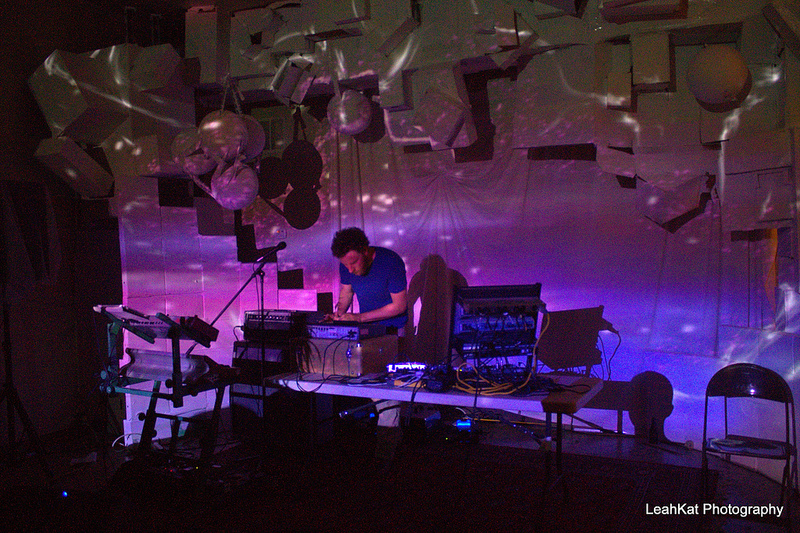 As Surroundher, Sterling Holman stood in front of the audience for the third time in as many days. Each act in which he performed was more euphoric than the last, with the final being the most aurally impressive of the three. Abstract rhythms and breaks pulsated with an IDM sensibility while Holman was awash in colors complementary to the sounds he engineered. In unison with jazz, electronic-based ebullience, and an unspoken respect for hip hop production, the final performance was hours shorter than I would have preferred. On the night of the performance, Surroundher released an intrepid collection of his first three albums, all available in a beautifully screen-printed LP jacket. Yes, the man has three entire discs worth of what was heard, and I was too foolish to grab one the moment he began tearing down his gear upon completion.
 As a composer, Matt Hill has the ability to create some rather chilling portraitures through Umberto‘s obsession with the macabre. With a performing live band, however, he often devises a humorous farce that could leave some unsuspecting attendees perplexed, at the very least. For one night only, Umberto became The Folk Implosion, and surely I can’t be the first one to suggest The FOKL Implosion as the name of their tribute. My ears perked up when I heard the warbly synth, and I had my assumptions the moment I heard the distinct bass line for “Natural One,” but until the rest of the band came in I thought it may have been an homage at best. What resulted was a 25+ minute version of the band’s lone charting single, and the entirety of their slot. Phil Diamond convincingly mimicked Lou Barlow, but he told me after the set that he was hardly familiar with the song.
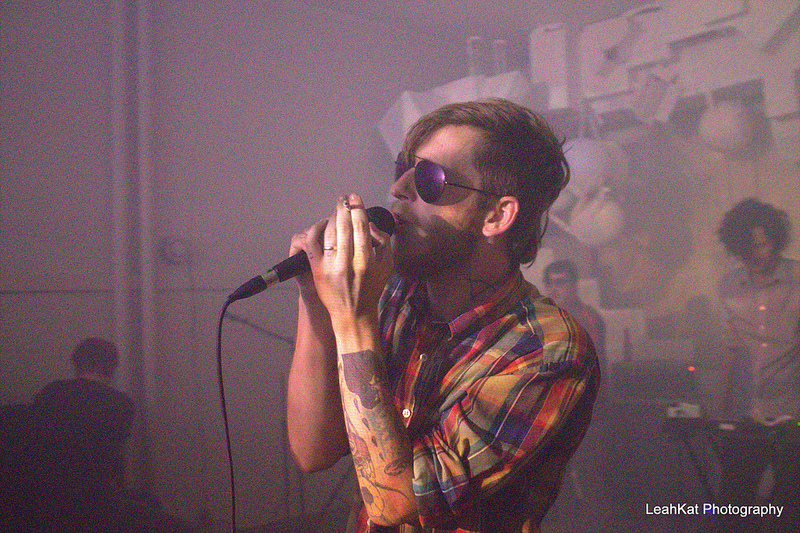
The final act of the festival was one of only two musicians performing that does not currently reside in the Kansas City or Lawrence region. Bloomington, IN, native Dylan Ettinger finished out a relatively psych-free evening with one final blast of ’80s influenced synth pop. The bespectacled Ettinger stood over a folding table covered in keyboards, synths and other tools with which to modify and skew the sound he created. His approach taken to the subgenre was simplistic at most, but at the end of it all, a mind-melting set of complexity wasn’t really what I or the crowd wanted. What they did want, though, was more saxophone. The set was opened with a sax player standing to Ettinger’s right, but through most of what followed he enthusiastically danced along to the music while still behind his mic stand. A group of people started to yell out “Pump up the sax!” until he finally made another appearance, and it certainly ended the night on a high note.
For the final night of the festival falling on a Sunday, the crowd hadn’t dwindled too badly. After the live music stopped once and for all, people began to congregate in the entry area and on the sidewalks in front of the space. As far as I’m concerned, the weekend was a success. If not in attendance, then in the quality of people I met and the nonstop music I witnessed over the course of three nights.
A final thank you to Leah O’Connor for the wonderful photographs she took at the festival. See the rest of her shots here.
KC Psychfest: Day Two Wrap-Up
 In the basement, Lawrence native CS Luxem commenced night two rather promptly at 7:30. Christopher’s voice resonated through the crowd as a sheet of plywood lay propped up behind him showing mundane footage of parades, soft news programming and other things that looked as though they were pulled from a VHS tape hidden in a shoebox for 20 years. Luxem’s songs are quirky without seeming dishonest, and he sings with an earnestness that even provided stability to a brief, poppy allusion to The Temptations’ “Get Ready.” His set up was simply a guitar and bass that he switched between, and a canopied box in front of him on which he placed his hat and a string of lights. The hat concealed the little amount of gear he had, but multiple times throughout the set he was seen switching a backtrack cassette in a player to his left.
 John Bersuch and Sterling Holman are a two-piece named Import/Export, and play divisively concordant instrumental rock that borrows only in part from an ideology of jazz meters and a subscription to constant innovation in an evolving music landscape. Bersuch sat behind the kit, expertly facilitating rhythm to keep time while Holman’s guitar sliced through stagnant air with unorthodox vibrance. The songs were distinctively raw in their composure, and were played with an equally coarse tenacity. Within the primordial soup of their songs was a loosely woven anatomy that minute after minute redefined what I previously thought of them through my experiences of listening to only the two-dimensional recordings they provide as some kind of archaic offering, which only served to whet the appetite. In short, they kicked my ass.
 I’m almost at a loss for words when attempting to explain the performance from Carnal Torpor. The set opened simply enough (considering the event), with a group of shirtless guys assembled at various stations around the room. A little over half the normal crowd could even gather around due to the tower of junk in the middle of the room that at first glance appeared to be nothing more than a hoarder’s wet dream. On one end of the set up, Colin Leipelt stood quietly and almost entirely shrouded in darkness. On the other, J Ashley Miller sat at a desk scattered with old keyboards and other sound modifying devices. Microphone in hand, Drew Roth paced menacingly back and forth at the front, a wooden assemblage dominated most of the area between the members and the conglomeration of things obscured some almost entirely from sight.
What followed could only be described as primal. The noise created by the group was little more than that, and only assisted the immediate experience the audience was thrown into. A tapestry of vaguely pagan equilateral symbols was draped across the wooden structure, and installed on either side was a wheel that had sporadically placed pegs extending from its outer edge, resting on the strings of guitars strapped into the piece. While Roth would sparingly shout and growl things that could not be understood, Miller remained seated, each note played causing his face to contort, his head and body would twist into disturbing positions, and he would open his mouth and stick out his tongue like a feral being. Roth took pause to pick up a jar of molasses, empty it into his hand, and then began ceremoniously wiping it across his shorn scalp, cheeks, chest, and arms. He then grabbed a sheet of aluminum foil, and with the same paralyzed features tore pieces off and stuck them to the parts of his body recently made adherent.
 Upon blindly covering areas of his torso, Roth grabbed a conch shell and began vibrating his breathing into it like a didgeridoo, then climbed atop the wooden tower, grabbed a weighted string and intermittently swung at a cymbal standing up front. While this happened, the band played on in discordant drones, flashes of electronic bliss scarcely shining through like the calm during a storm. The wheels were put to use by Miller and another, who spun them by hand, each peg hitting the strings of the guitar and causing a rigid, never-ending power chord while hands moved up and down the neck. The imagery I’ve laid out may be a bit overwhelming, but there’s more. After a bull’s horn full of honey was passed around to those willing to drink from it (germaphobes unite), Roth emptied the rest onto his head and grabbed an audience member.
He picked up this person and held them in his arms for a moment, then dropped them down on his knee as though he was breaking their back. While the man was still in a daze, Roth ripped off his shirt, threw him on the ground and strapped a gag into his mouth. He grabbed a giant, red gummy worm and, acting as though he was pulling out the man’s intestine, began eating it. Once the music began climaxing, the man still lay on the ground with his eyes closed, Roth moved on to close out their set with some other grunted words which I could not make out. The set ended, and there was a discernible pause before a tempered applause began to come from the crowd, likely because everyone, like myself, was standing with their mouths open in shock after what just happened.
 Back upstairs, Tim and Heather Goodwillie conceived an at times harsh realm through the constantly fluid daymare of Goodwillies. The project was helmed by Tim, a Los Angeles native who has performed previously with (VxPxC) and Thousands, both endeavors who like Goodwillies released stretching sound structures almost solely on CD-R and cassette. The husband and wife stood, apoplectic, for the duration of their allotted thirty minutes, the constantly moving visuals pouring over them like an unspoken tertiary member whose purpose was only to invoke a sense that could stray the mind from the agitation being ingested by the ears. I took a brief moment during their set to back against a wall and close my eyes, as only then the subtle melancholy of their ambience could truly be appreciated.
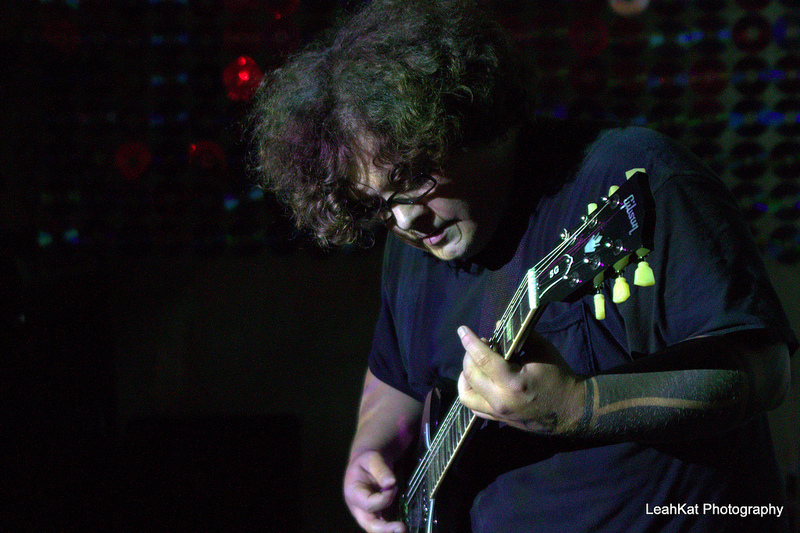 It’s not my intention to denigrate any of the artists from the festival, but something about Andrew Plante‘s set didn’t quite sit right by me. I could make a cheap dig at Sunn O))) and their propensity to voyage into guitar-driven pieces of full-blown, single layered ambient drone, but then that becomes a blanket insult for a handful of those playing, which is neither fair nor intended. I can only provide critique based on the merit of his set alone, and though it did not strike my fancy (more of a time and place thing, really) he certainly enamored a number of those in the crowd. Alone in a spotlight, Plante stood. Though he was nowhere near motionless, his set still fell flat to this observer. He ended the set rapturously, by extending his guitar into the feedback field of his amp, providing the only time, however brief, that the sounds became anything other than monochromatic.
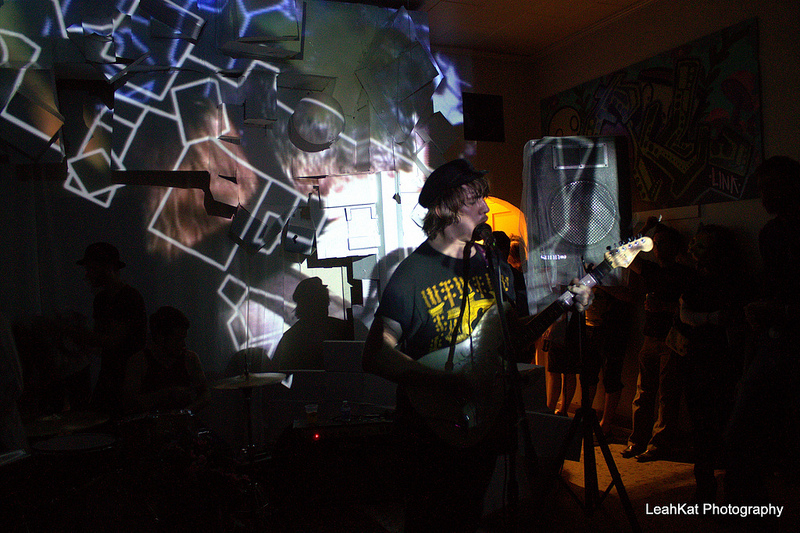 In addition to being the most populous band to perform at the festival, the seven people who stood and represented The Conquerors turned out being likely the most popular band as well. By the time they started, half of their scheduled time had already gone by — and by the time they ended, the night was a full thirty minutes behind schedule. Set times are of no consequence when you have the main room congested with the closest thing to a full house as possible. It also doesn’t hurt when you play crushingly kaleidoscopic psych rock that leaves a sear on the brains of all those in attendance. Their more ample songs could get a throwaway comparison to Thee Oh Sees, but the overall verisimilitude of their craft is an admirable drawing from an era spanning well that they come by honestly and keep riveting through impressive execution.
 Now that the night was already thirty minutes behind, the flow of the evening just seemed a bit… off. After a large portion of the crowd spilled out into the street and onto the smoking patio, Lawrence five-piece Karma Vision tore into a pop-filled thirty minutes of their own, wherein they played songs adversely different from those heard above. With the exception of bassist Danny Barkofske and drummer Rachael Mulford, the band seemed entirely listless and detached from the rest of the room. Musically, though, every member was on their game throughout renditions of songs from the band’s quickly growing discography. A highlight of their set was the buoyant “Teeter Totter,” whose organ intro is unmistakable and was one of the few songs which got the rest of the band to move more than normal. I believe I may have even seen a smile or two.
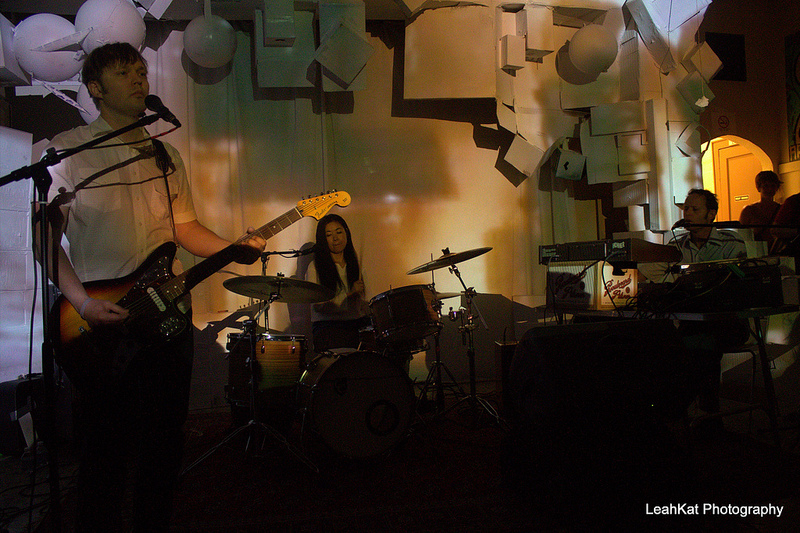 Festival organizer Dedric Moore and his brother had already played before, with both being in Monta at Odds, and Delaney also performing in Twofaced with Sterling Holman (who himself was set to perform once more before the festival ended). I’d cry nepotism if every band the guys participated in wasn’t incredible and wholly different from the last. Enter Gemini Revolution, the Moore brothers’ foray into a downplayed psych more modern, but no less moody, than the soulful Monta. The brothers kept an off kilter electricity of guitar and keyboard centric rhythm between them, but Mika Tayana’s drumming spotlighted some fantastic irregular temporal patterns that ultimately gave the trio the concentrated backbone necessary in order to complete their set as one of the primary stand-outs from the entire weekend.
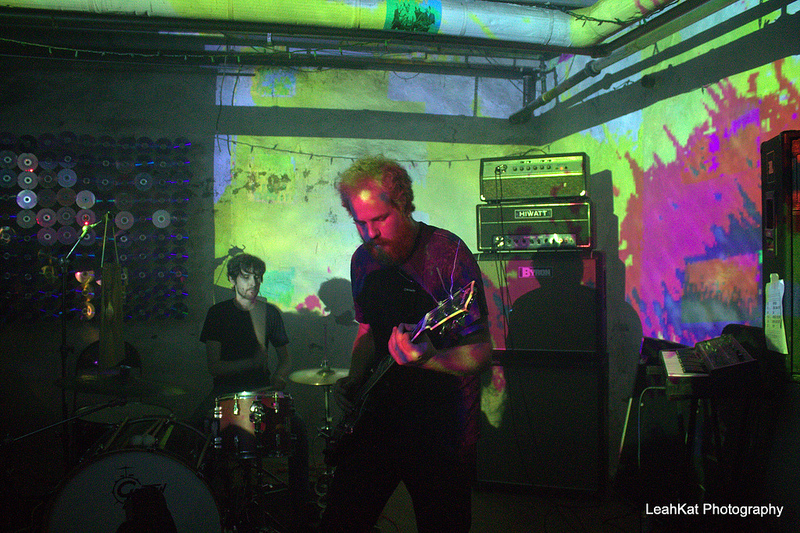 Justin Wright is typically renown for solo spacial compositions that span from five minutes to more than half an hour and can encompass any variety of emotions, from pure elation to unadulterated dread. This year, Expo ’70 has been collaborating with two other musicians, performing measured illustrations that paint an effigy in sonic momentum. When the normally soft-spoken Wright stands with a stack of amps to his back, he undergoes a lupine change surely brought on by the push of sound behind him. Pummeling is the only possible description for the force with which the music hits– a paradigm to the very word “loud.” I lament even having the knowledge that the three-piece band is only temporary, but I hope it can make an occasional resurgence for some live performances when the finished recordings are made public.
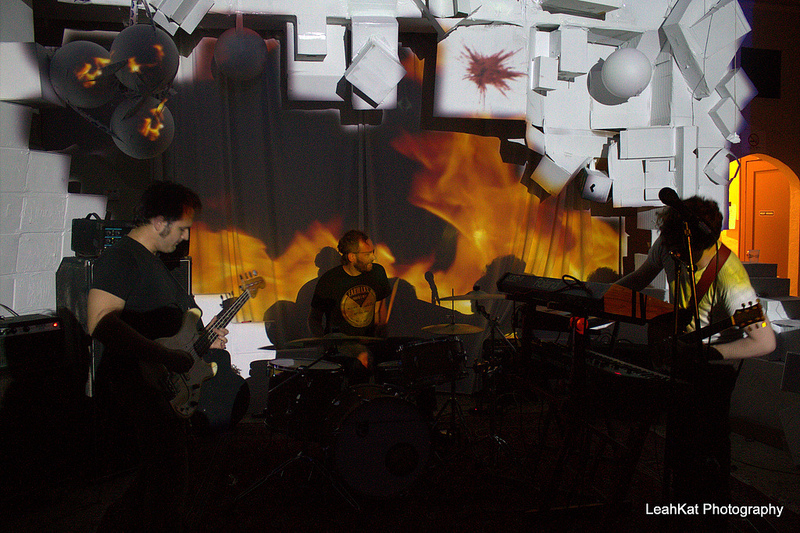 The morning of their performance, Be/Non announced that Jeremiah James had quit the band to pursue other interests. This interest included his new solo project under the name Yuo, which was to perform at the festival the next evening. Why he couldn’t wait another day to quit may remain a mystery, but the unexpected trio made due and played a great set. Brodie Rush is the driving force behind the band. Hell, Rush more or less is the band, and keeps a rotating cast of musicians on deck for when he feels too dormant and wants to switch things up, which admittedly seems to be pretty often. With an eyepatch adorned Ryan Shank on drums, Ben Ruth on bass, and a specially programmed astral projection behind them, the trio cruised through the sounds they’ve been focusing on since the release of the space-funk opus A Mountain of Yeses.
By the time I walked back to my car, I was a short five hours away from waking up and heading in to work. Reluctantly, I skipped the two closing sets from Vor Onus and Kevin Harris. I’m sad to have missed out, but I have zero regrets when it comes to things involving sleep.
Once again, thanks to Leah O’Connor for giving people something to look at on this page. See the rest of her great work here.
 Riot on the Plaza